
Share this
by Susanne Schuler on 19/12/25
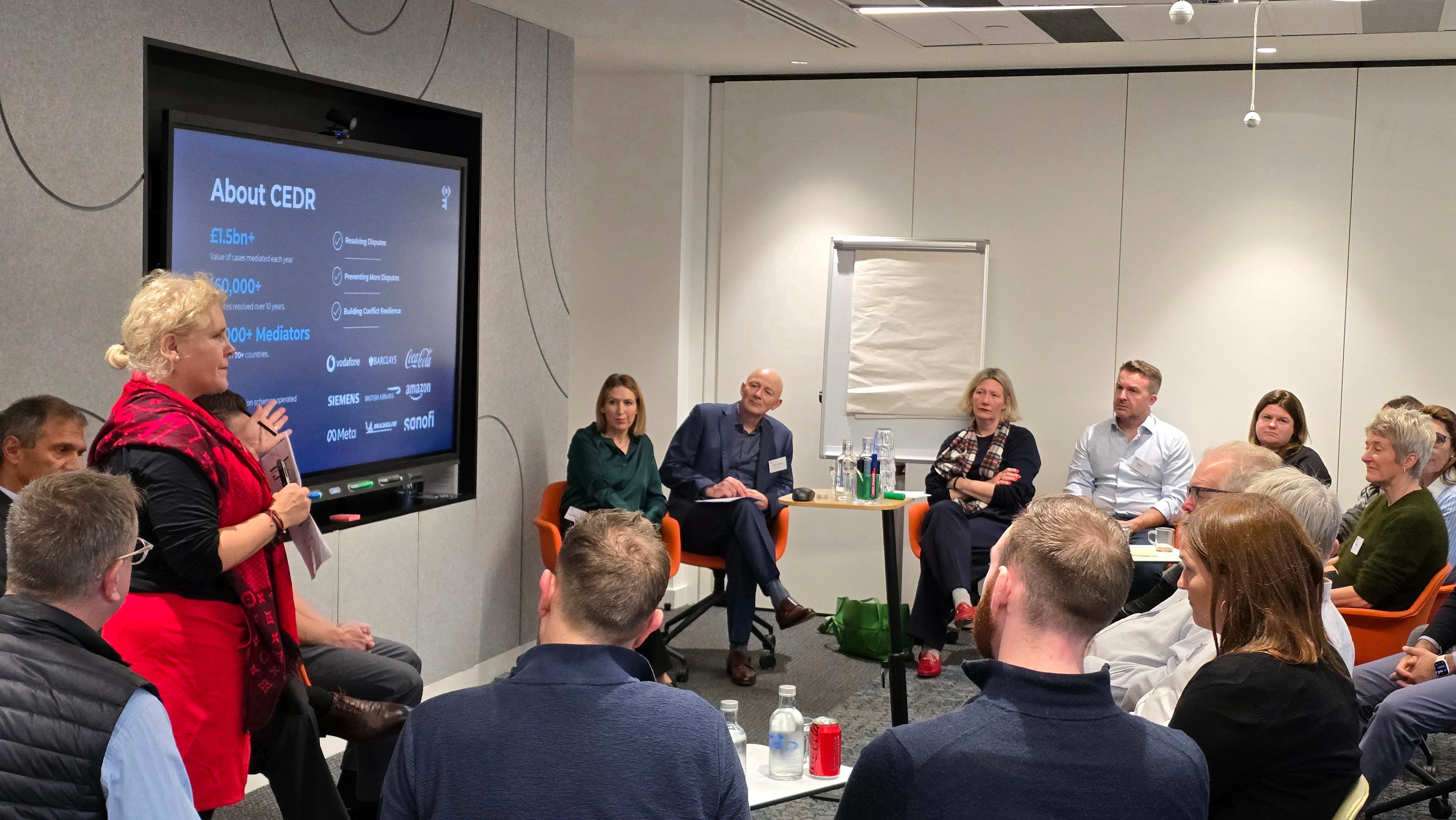
On 11th December, CEDR hosted an event that offered a fresh perspective on one main challenge that businesses face: how to perform well when the pressure is on.
Bringing together world-class crisis negotiators and senior business leaders in London, the session explored a powerful idea — that the skills developed in life-or-death situations are not only relevant to business, but often exactly what organisations need most to succeed.
When Crisis Skills Meet Everyday Business
Hostage negotiation may sound a world away from workplace conversations, trade union negotiations and client meetings, but the parallels quickly become clear. In both environments, emotions run high, trust can be fragile, the information available is incomplete, and decisions really matter.
As one facilitator put it, “Pressure doesn’t change people — it reveals them.”
Rather than focusing on theory, the event brought negotiation to life. Through live role-plays and interactive exercises, audience volunteers experienced first-hand how quickly conversations can escalate, and how the right techniques can restore clarity and control.
Real case studies, from major sieges to organisational crises, showed how preparation, communication, and psychological insight can turn moments of risk into moments of opportunity.
Teams, Tension and Talking Under Pressure
One of the most popular elements of the afternoon was the team negotiation simulation. Using the “crisis cell” model, participants saw how clear roles, structured communication, and shared objectives help teams stay aligned when pressure rises.
The facilitators also introduced a practical decision-making tool, used by police in situations ranging from everyday incidents to life-or-death crises. Designed to cut through complexity, it helps teams assess what’s happening, decide what matters most, and choose a course of action, even when time feels scarce.
An effective debrief framework was demonstrated, used routinely in policing to support learning after every incident. Rather than focusing on blame, it creates space to reflect, improve, and strengthen future performance.
The takeaway was clear: high-performing teams don’t rely on instinct alone — they use proven frameworks that create clarity, good decisions, and include time to think.

Managing Emotion - Calm Is a Skill
A recurring theme was emotional control. In crisis negotiation, staying calm isn’t a personality trait, it is a learned and vital skill.
One quote in particular stayed with many attendees:
“When emotions rise, don’t be a palm tree in the wind, be a rock in the storm. Let emotions wash over you rather than swaying into them.”
Another key principle followed closely behind:
“Name it, and you tame it.”
Acknowledging emotion, your own or someone else’s, often reduces its power and keeps conversations on track. For example, “I get the sense you are very angry” or “I can see this is really upsetting to you.”
For business leaders navigating tense negotiations or internal conflict, this really struck a real chord.
The Experts Behind the Stories
The facilitators brought deep experience, but what stood out most was their approachability and clarity. We thank:
- Philip Williams, former Director of the UK’s Hostage and Crisis Negotiation Programme. Phil shared lessons on leadership when decisions carry real consequences.
- Katey Martin, former counter-terrorism negotiator and Kidnap Commander. Katey spoke about empathy as a practical tool, not a soft option.
- Chula Rupasinha, former police negotiator and mediator. Chula translated decades of experience into techniques that work in everyday organisational settings.
- Damian O’Connell, senior police leader, negotiator and executive coach. Damian demonstrated how structure and resilience allow teams to perform under pressure.
The takeaway? These are extraordinary skills coming from a dangerous world, but they are accessible, learnable, and highly practical for all of us.
Why This Matters for Business
Conflict is unavoidable. And, poorly managed conflict is expensive. It slows decisions, damages relationships, and drains energy and productivity.
The upside is significant. Research from McKinsey & Co. shows that 96% of Fortune 500 CEOs believe strong negotiation capabilities can increase profits by at least 5%. CEDR has seen this impact first-hand across a number of sectors, including finance, telecoms, and the public sector.
Looking Ahead
Imagine a trained and capable organisation where difficult conversations lead to better alignment, pressure sparks clearer thinking, and conflict becomes a source of learning rather than friction.
That future isn’t theoretical. As these four experts showed, teams trained to manage emotion, communicate clearly, and negotiate well can turn challenge into improved performance.
Final Thoughts
Conflict is inevitable; dysfunction is optional. Every conversation is an opportunity to create value, or lose it.
CEDR helps organisations build the skills, confidence, and mindset to choose the former.
For those who joined us on the day, thank you for your energy and openness. For those who didn’t — this is just the beginning.